Two proposals list the same generator, but the totals are thousands of dollars apart. One says “complete installation.” The other separates electrical work, fuel connections, and permits. Which one actually covers the finished project?
Before comparing prices, ask each installer to spell out what the system will power, what work is included, who handles the remaining work, and what could change the total. An equipment model and a bottom-line price leave too much unanswered.
For a Lakeland homeowner, the most useful generator quote is one you can compare against another proposal without guessing what “installation included” means.
Start with what you want running during an outage
Give every installer the same description of your needs. Identify the appliances and systems you want available, including air conditioning, refrigeration, a well pump if you have one, and any other priorities. Mention planned additions so the contractor can discuss them before selecting equipment.
Then ask for the proposed operating limits in plain language: What can run together, and what might be temporarily managed or left off?
A larger number on the generator does not explain the whole design. Generac's system-planning tool identifies equipment beyond the generator itself, including transfer switches and load-management controls, and notes that some homes may need panel, meter, or fuel-tank work. Ask the installer to explain which items apply to your property and why.
Record the exact generator and transfer-switch models in each proposal. If the recommended systems differ, have the contractors explain the difference against the same household priorities before deciding which price represents better value.
Separate fuel coordination from the cost of fuel work
“We coordinate with the gas contractor” answers a scheduling question. It does not tell you whether that contractor's bill is included.
Ask who supplies and pays for the fuel connection, any necessary gas-service changes, and a propane tank if one is part of the design. For a proposed tank, clarify ownership or rental arrangements and whether the initial fuel delivery is included. Get the responsible company's name and its separate proposal when applicable.
The existing fuel supply also needs assessment. Generac's installation guidance for homeowners identifies a properly sized gas meter or propane tank as part of meeting the chosen generator's fuel demand. Having a gas connection at the house does not, by itself, settle the scope of the generator project.
Consider this hypothetical comparison: Proposal A includes the generator and electrical installation but leaves the fuel work to the homeowner. Proposal B includes an agreed fuel scope. You cannot judge the difference in total cost until you obtain the missing fuel quote for A. Once both scopes are complete, either proposal could be the better fit.
Make the proposed location part of the quote
Ask the installer to identify the planned generator location and the routes assumed for electrical and fuel work. The proposal should explain any included trenching, surface repairs, or landscaping restoration, along with work that will be charged separately.
Generac's installation overview explains that placement relative to the fuel supply and electrical service affects installation cost. Its standby-generator FAQ directs owners to the specific unit's installation guide for dimensions and clearances. Leave placement approval and technical design to the contractor; a convenient empty corner of the yard is only a starting suggestion.
If your builder previously installed generator preparation, ask what the installer has inspected and agreed to reuse. The estimate should identify existing equipment that is accepted, equipment that needs replacement, and anything still awaiting verification.
Ask who handles Lakeland's permit documentation
The City of Lakeland publishes a generator-permit checklist that includes a dimensioned site plan, manufacturer installation information, an electrical diagram, and generator and transfer-switch specifications. It also calls for a load calculation when an automatic transfer switch is used. These are examples of the documentation behind an installation proposal. City of Lakeland generator requirements
Ask whether preparation of the applicable documents, permit fees, and inspection coordination are included. If a fee is an allowance rather than a fixed amount, ask how any difference will be billed.
Have the contractor confirm the permitting authority and electric utility for your specific property. Use the city's checklist for work under its jurisdiction; do not assume that every address described as “Lakeland” follows the same process. The quote should name who handles any required utility coordination and explain when an interruption to your home's power is expected.
Put the proposals beside the same checklist
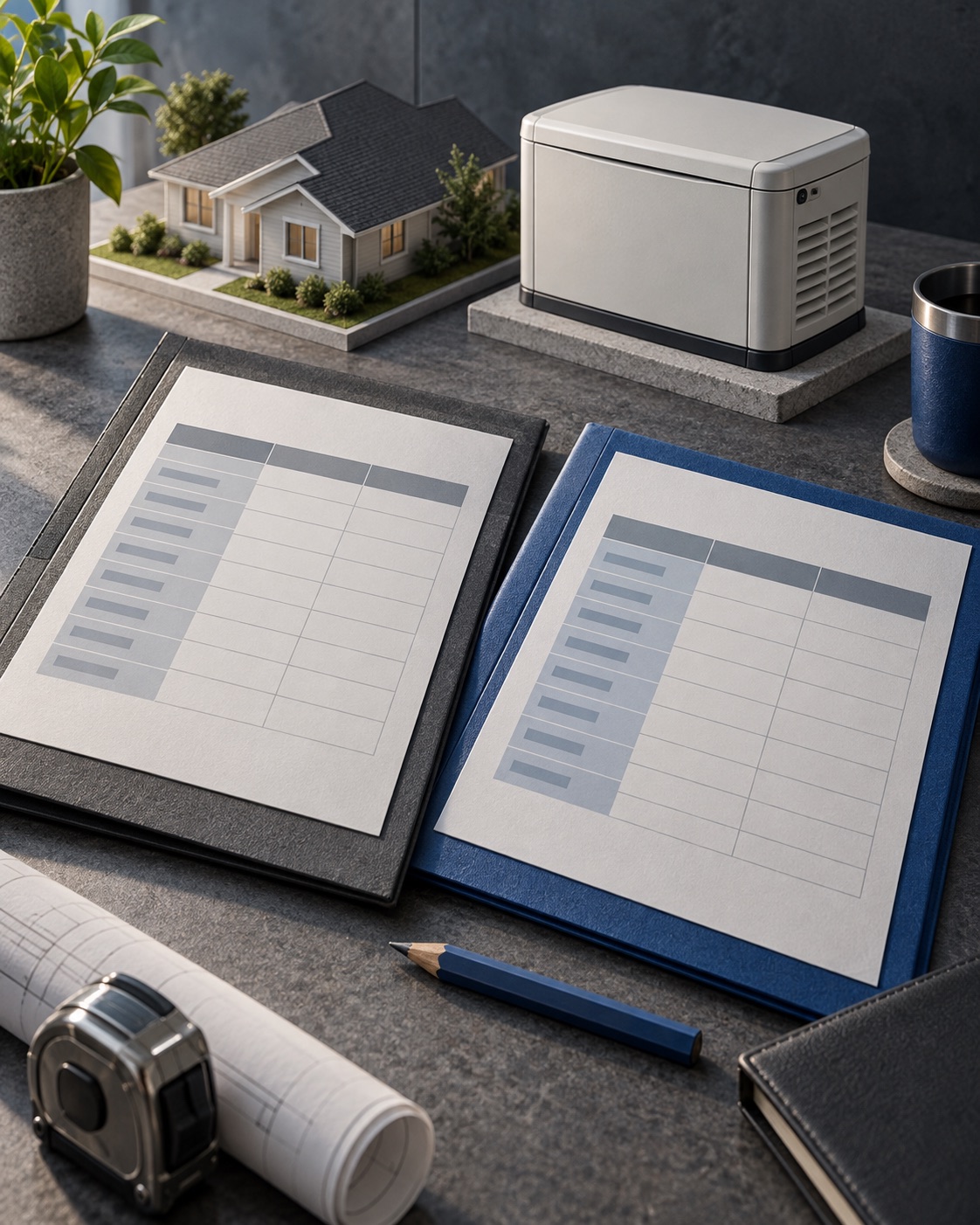
Copy this table into your notes and fill it out for each installer. Use included, separate price, allowance, or not applicable, then add the relevant amount or explanation. Mark unanswered items unresolved rather than treating them as free.
Compare each proposal against the same scope.
| Item to compare | What needs to be clear | Quote A | Quote B |
|---|---|---|---|
| Equipment and intended coverage | Exact models, household priorities, operating limits, and proposed load management | Not filled in | Not filled in |
| Electrical work | Transfer-switch installation, wiring, and any identified panel or service changes | Not filled in | Not filled in |
| Fuel scope | Connection work, any supply changes, tank arrangements, and initial fill if applicable | Not filled in | Not filled in |
| Site preparation | Generator support, access, trenching, and restoration responsibilities | Not filled in | Not filled in |
| Permits and coordination | Documents, fees, inspections, and any utility scheduling | Not filled in | Not filled in |
| Startup and handover | System testing, owner orientation, manuals, and completion records | Not filled in | Not filled in |
| Price conditions | Taxes, allowances, exclusions, payment stages, and approval of extra work | Not filled in | Not filled in |
| Ongoing service | Written warranty terms, maintenance, monitoring fees, and service contact | Not filled in | Not filled in |
On a small screen, swipe the table to see both quote columns.
Keep one-time installation costs separate from ongoing expenses. A year of maintenance included in one proposal deserves its own line; it should not obscure a missing part of the installation in another.
When a proposal includes an electrical panel upgrade, ask the contractor to identify the reason and describe that work separately. You should be able to understand what problem the proposed work addresses without diagnosing the equipment yourself.
Define when the job is complete
A delivery date, an installation date, and a working system ready for handover are different milestones. Ask what the quoted schedule includes and which steps depend on other parties. Generac notes that preparation can take multiple weeks because of site work, gas preparation, permitting, and contractor availability. Its installation overview also describes testing the completed system by simulating an outage. Generac installation process
Have the installer explain the testing and owner orientation included in your proposal, the records you will receive, and who to contact afterward. Request the actual warranty terms and a separate explanation of maintenance arrangements. Do not assume that installation, routine service, and every future repair are covered by the same price.
Before accepting a proposal, send each installer the same final question: “What would I still need to arrange or pay for to get the system described here fully installed and operating?” Ask for the answer to be incorporated into the written scope.
For a project assessment, request a whole-home generator consultation with Barnes Electric. Bring your backup-power priorities and any existing generator-preparation records so the team can discuss the work your property needs and provide a written proposal.